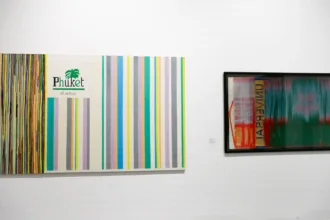
Daniel Buren is best known for his use of stripes – typically vertical, often white alternating with colour – and his “in-situ” works: installations made specifically for a place, where the architecture, space, and viewer’s movement are part of the piece.
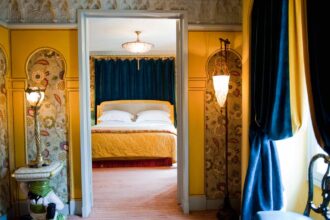
Many of his works cannot easily be removed from or separated from the site for which they were made. They engage architecture, light, context, viewer’s movement. For example his major installation in the courtyard of the Palais-Royal (Les Deux Plateaux, 1985) is a prominent example, or recently collaboration at Riffers Art Initiatives in Paris.
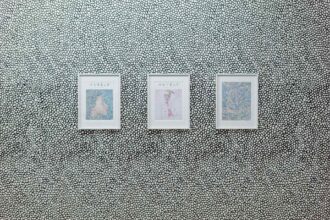
Daniel Buren exhibition “Du cercle aux carrés” suggests a geometric shift (circles to squares), continuing Buren’s interest in form, site-specificity and viewer interaction.
Daniel Buren is continuing to moving beyond his most-famous striped canvases into more complex materiality (mirrors, prisms, folds) and spatial effects. The shows emphasise the physicality of exhibition space – how works don’t just sit on the wall, but relate to architecture, reflection, viewer movement, material effect. The circles vs squares signalling dialogue.
Artist looks out for how he uses “circle” vs “square” geometries — perhaps signalling a shift or dialogue between forms.
All my work consists of trying to bring out, add or remove certain elements in a given place.
Daniel Buren was born on 25 March 1938 in Boulogne-Billancourt, France.
He studied at the École des Métiers d’Art (beginning in 1958) and started – from the early 1960s – to develop an art practice that challenged traditional painting, focusing instead on issues of space, perception, and the role of the viewer.