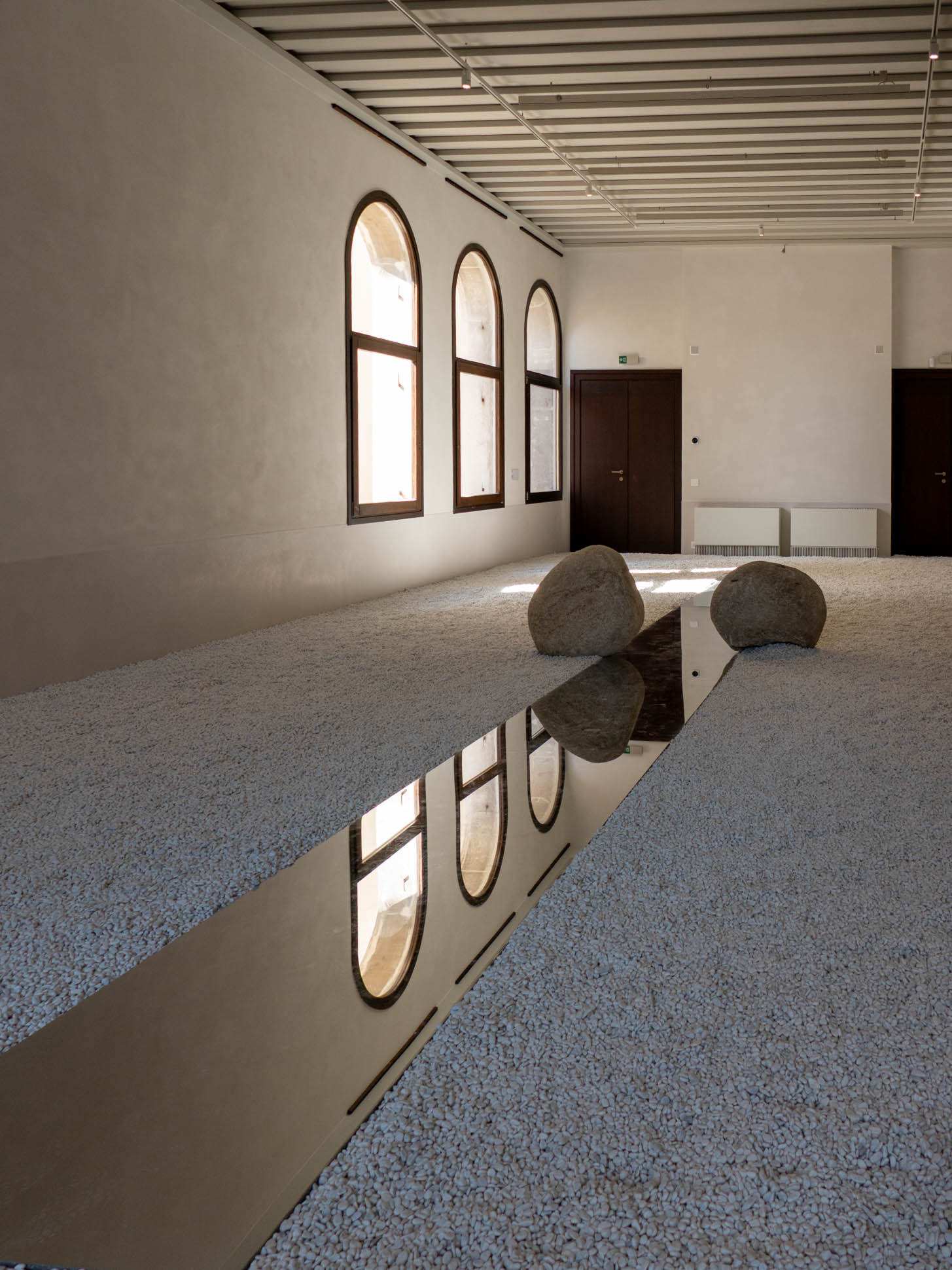
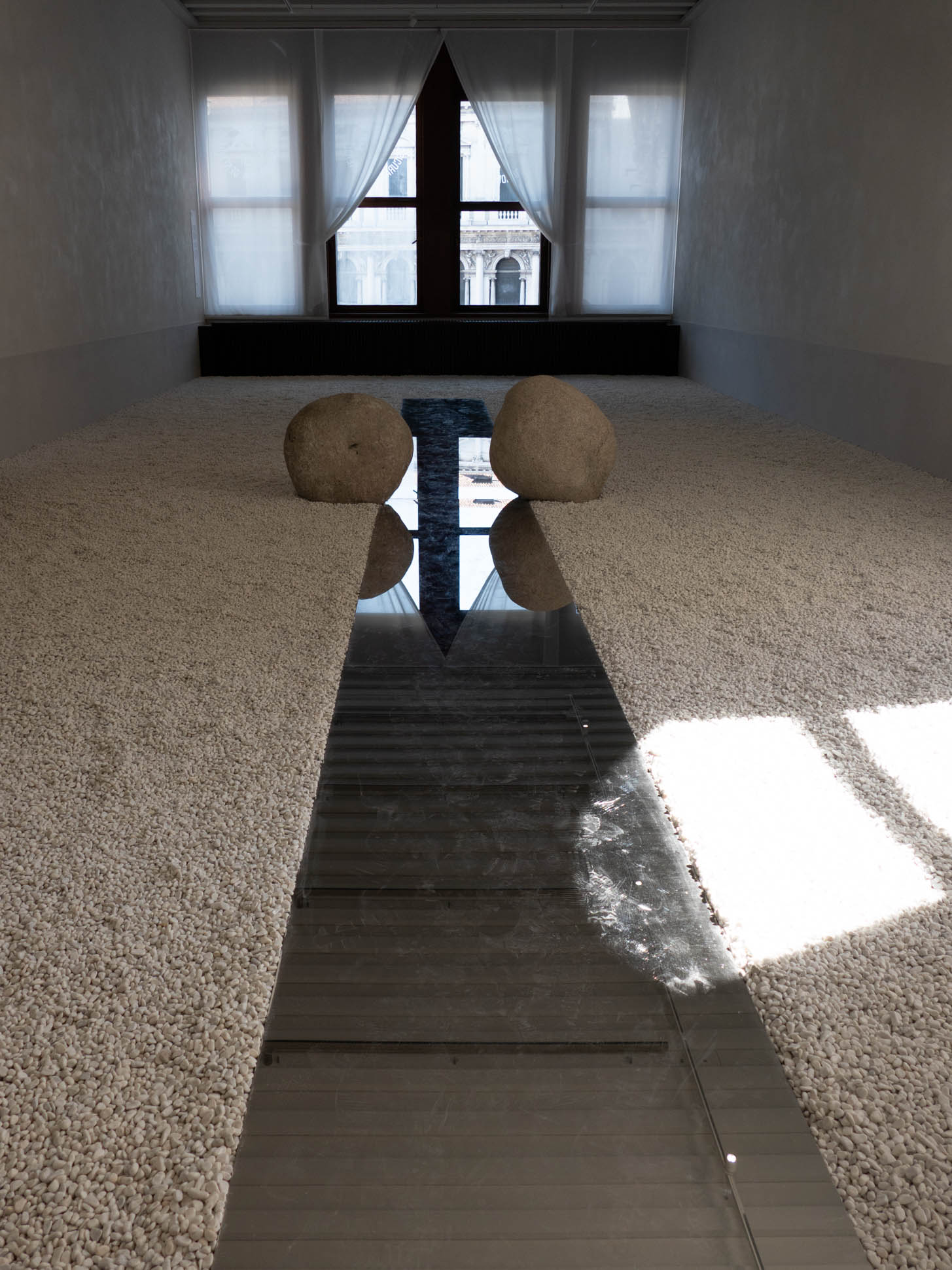
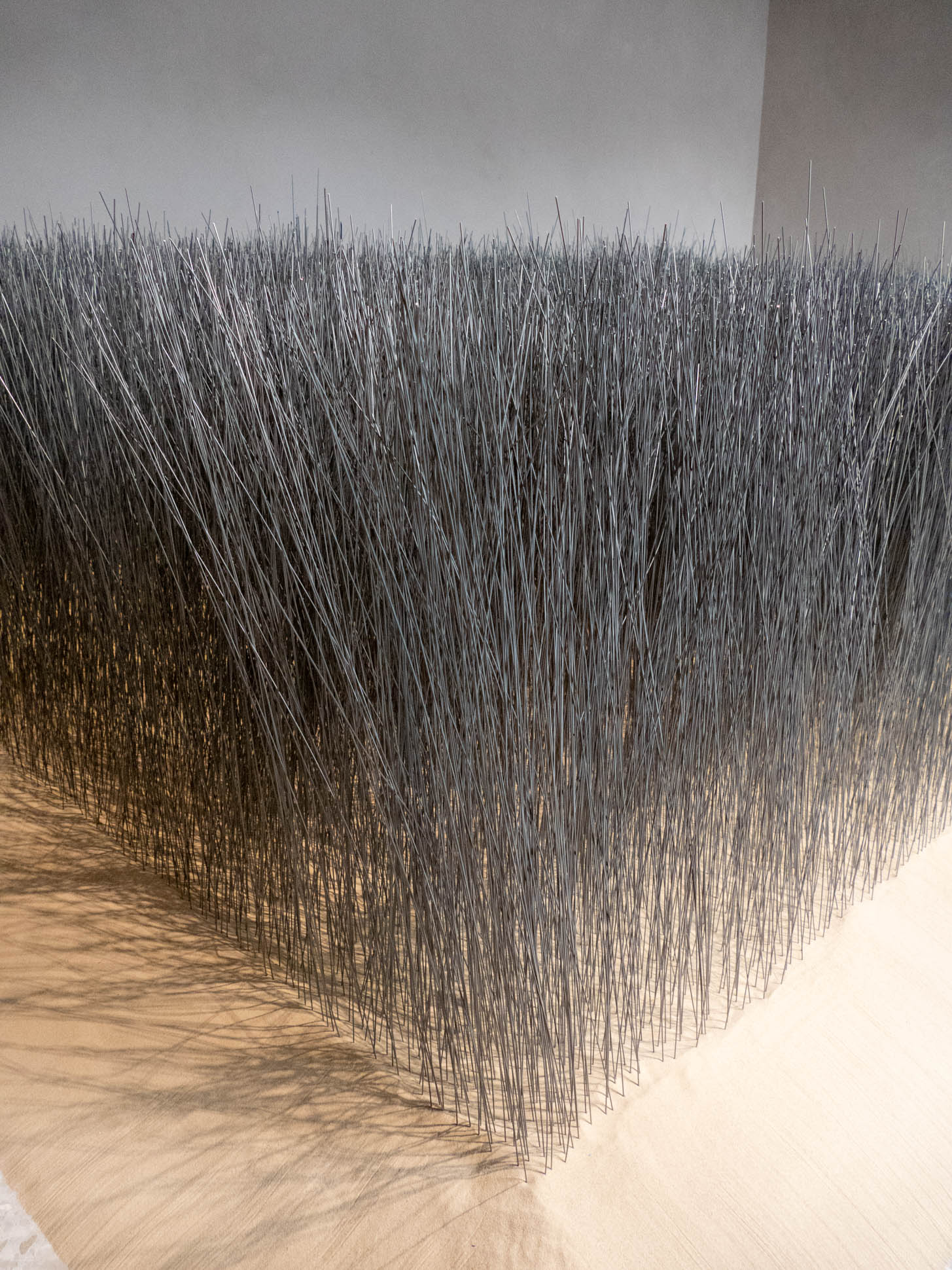
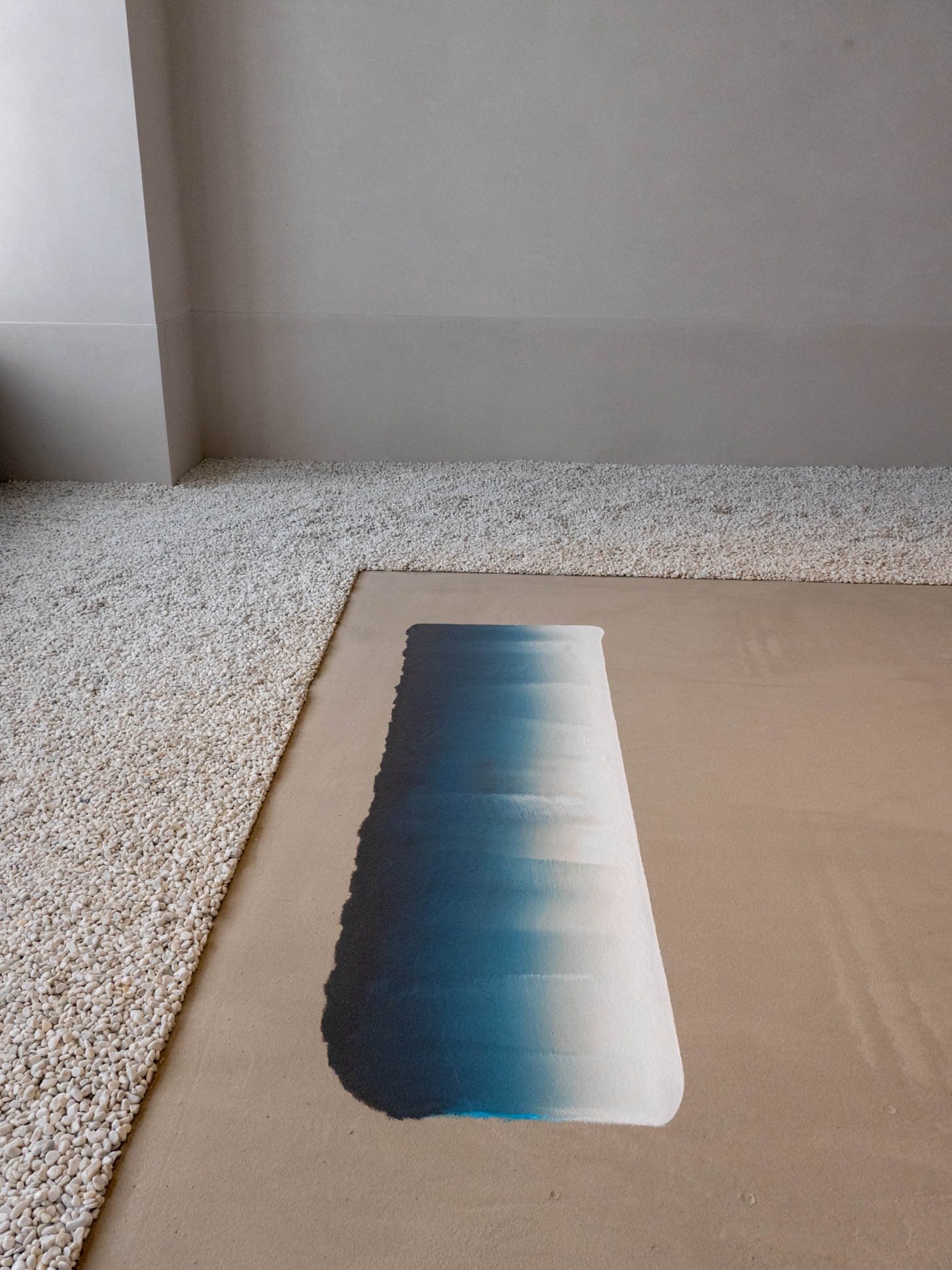
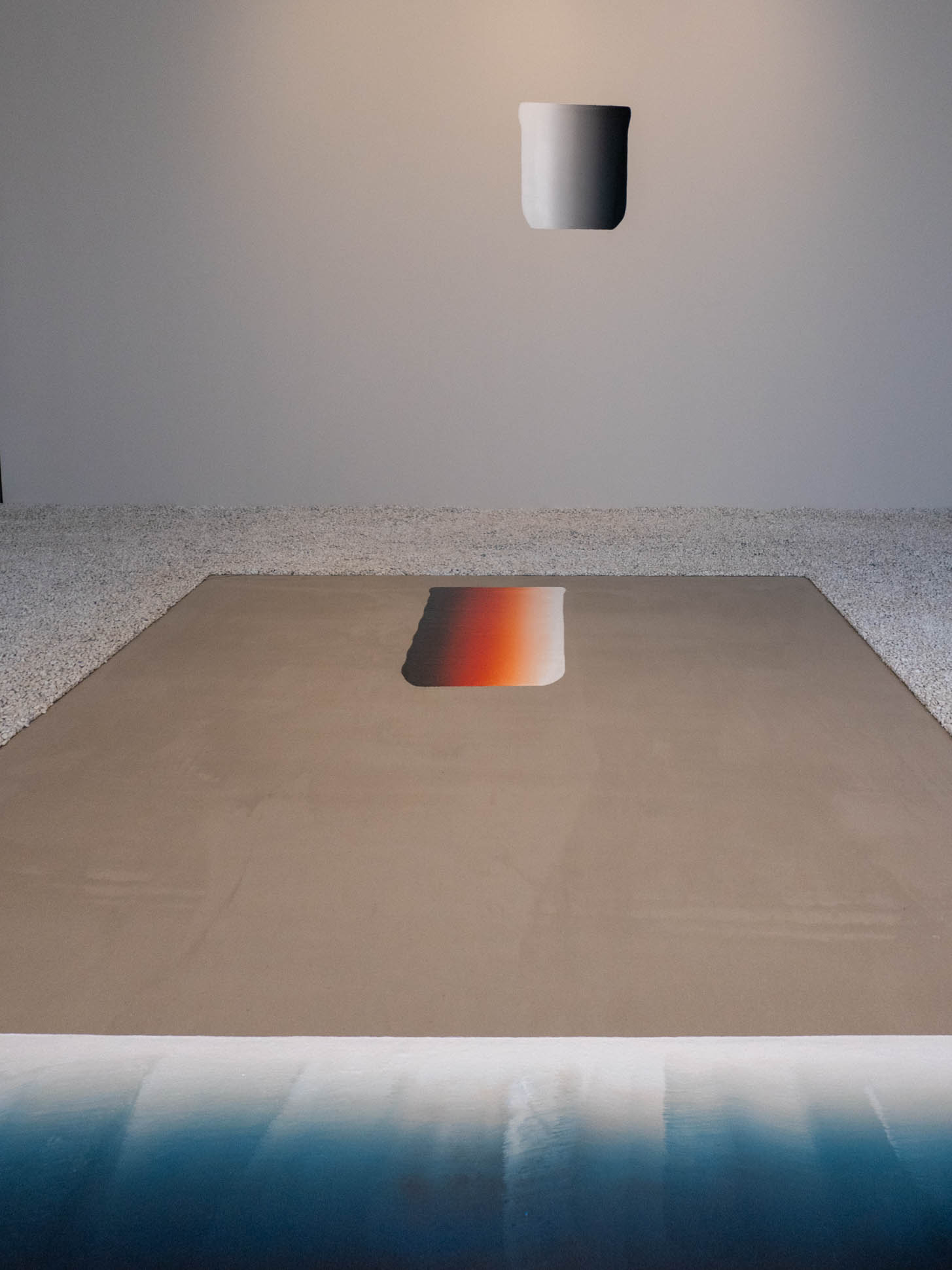
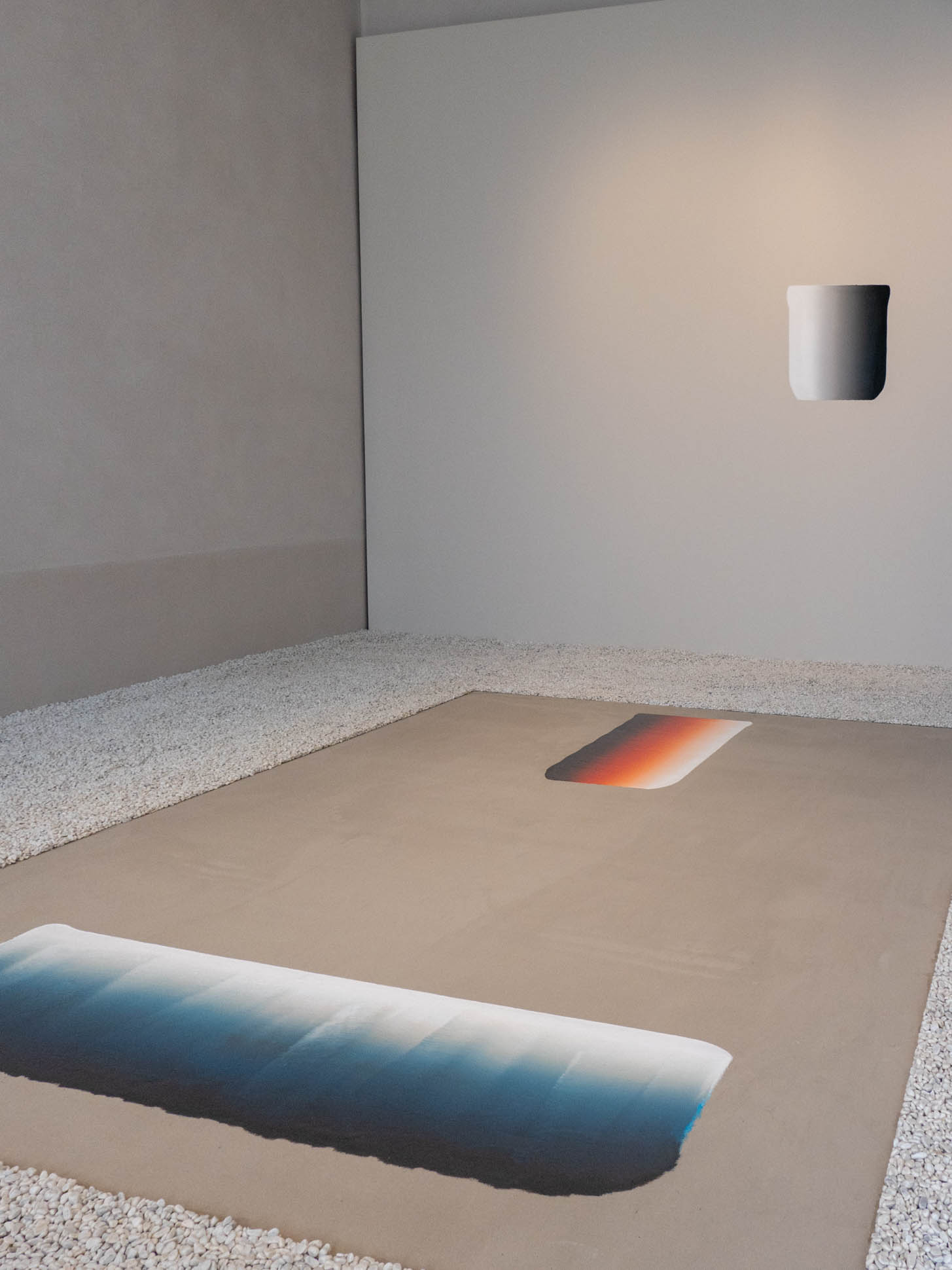
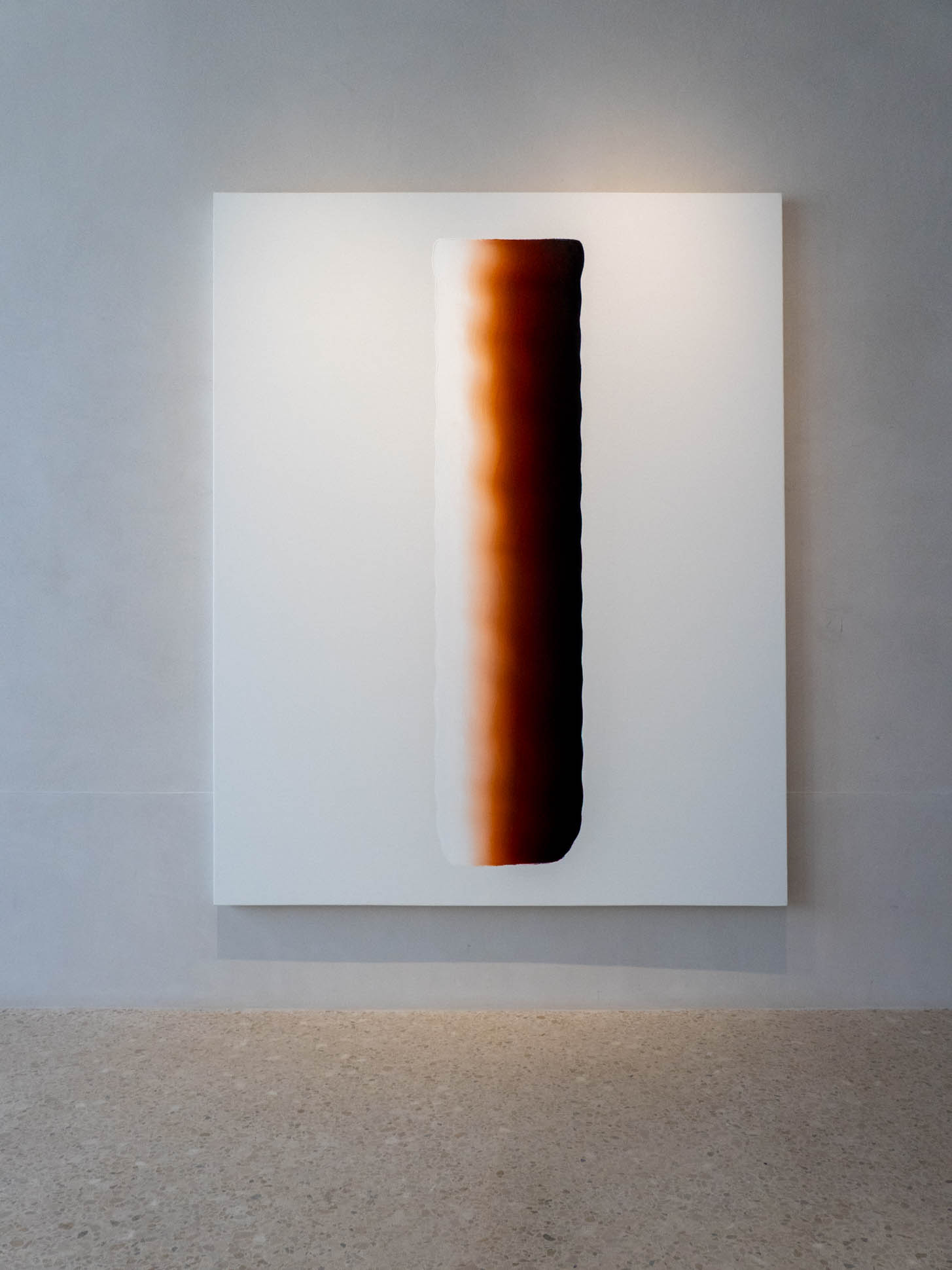
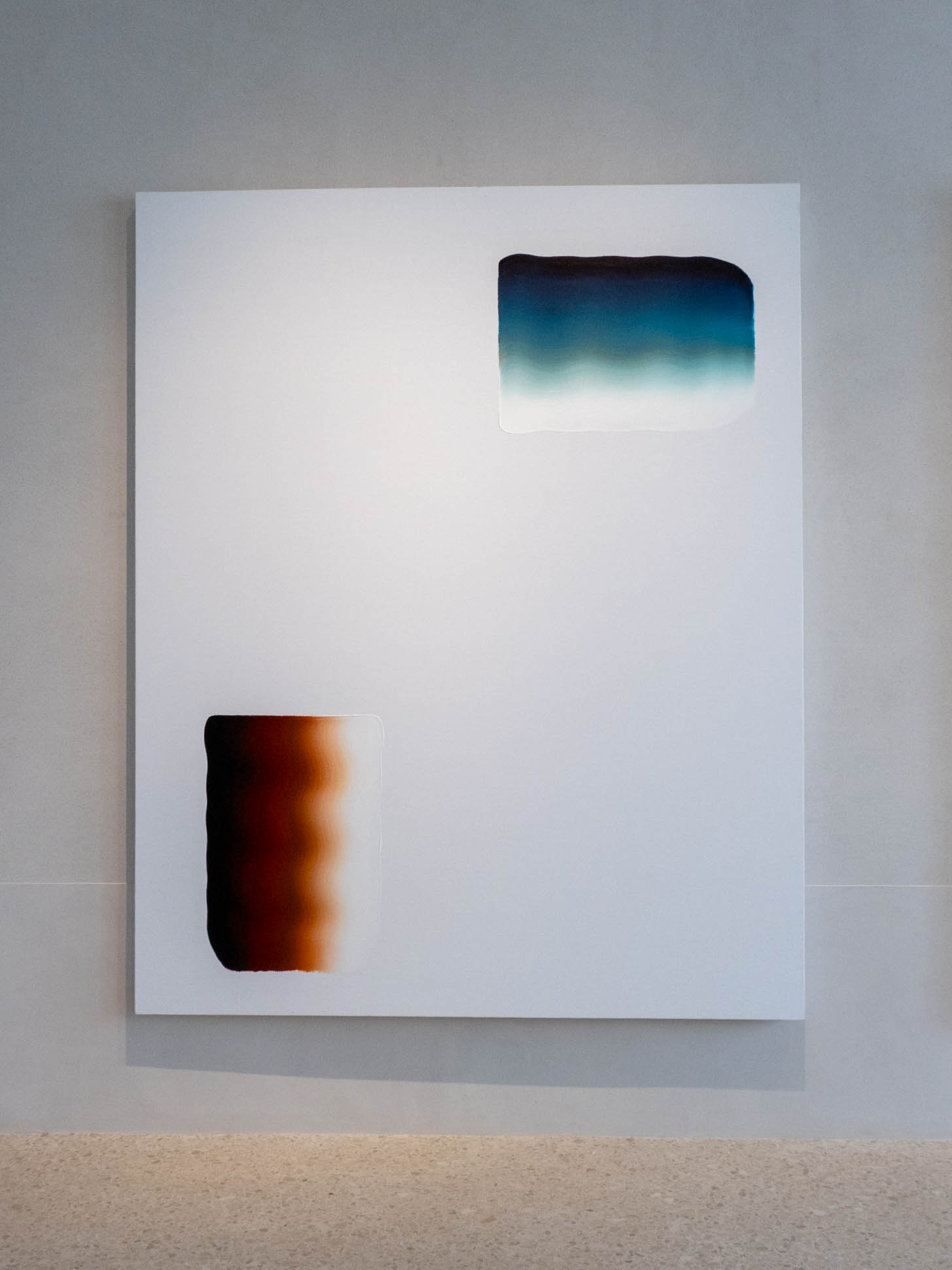
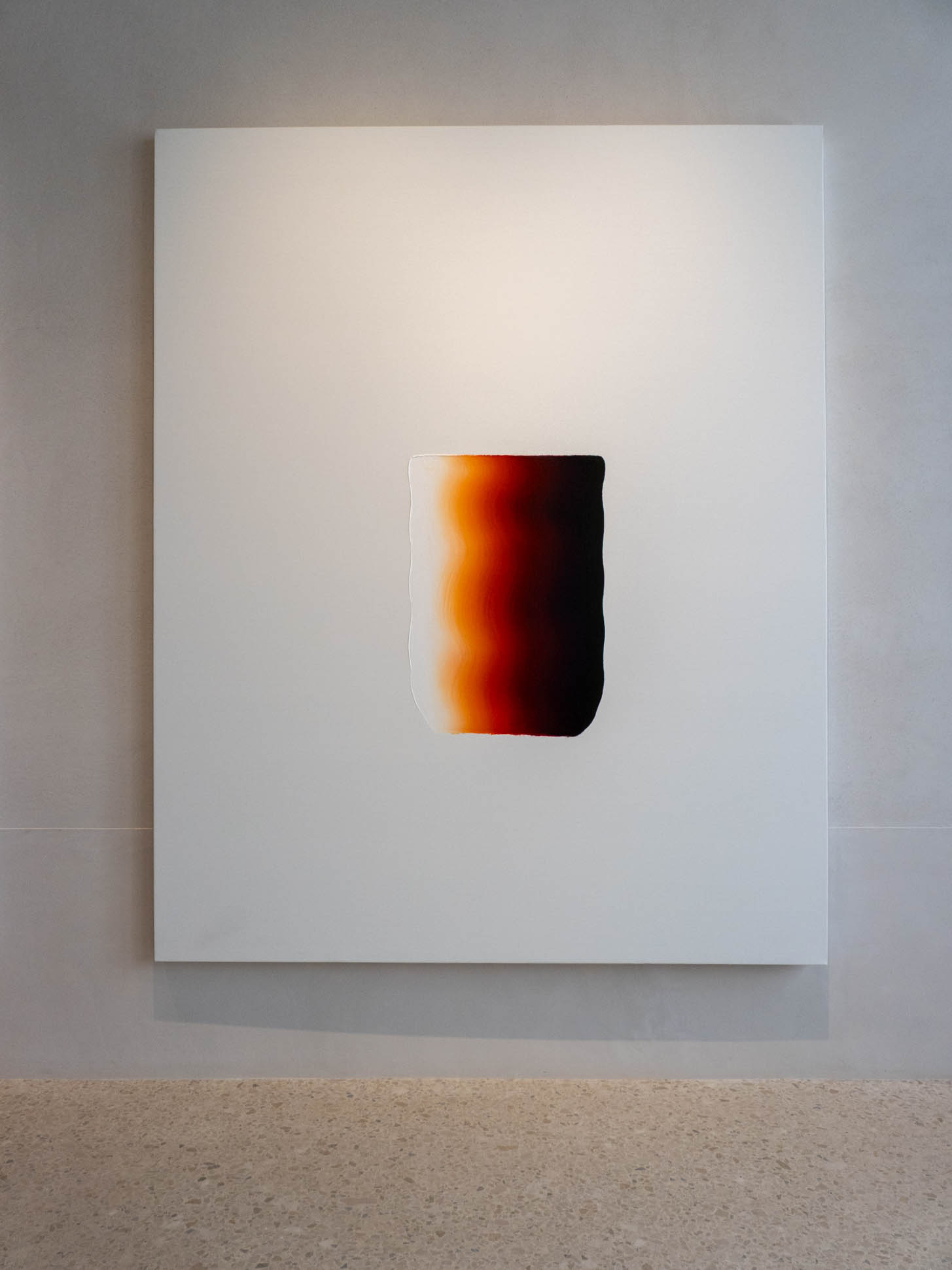
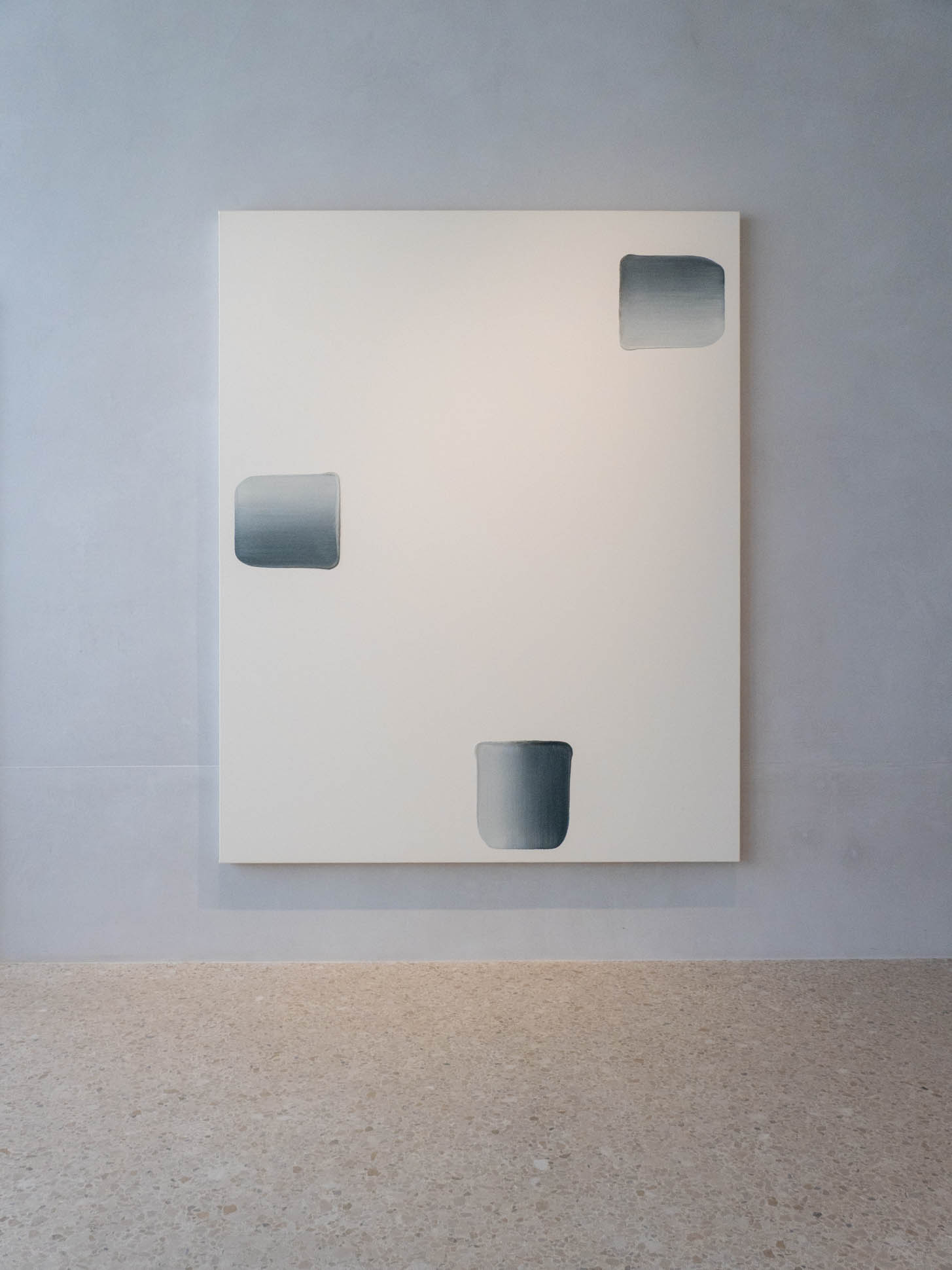
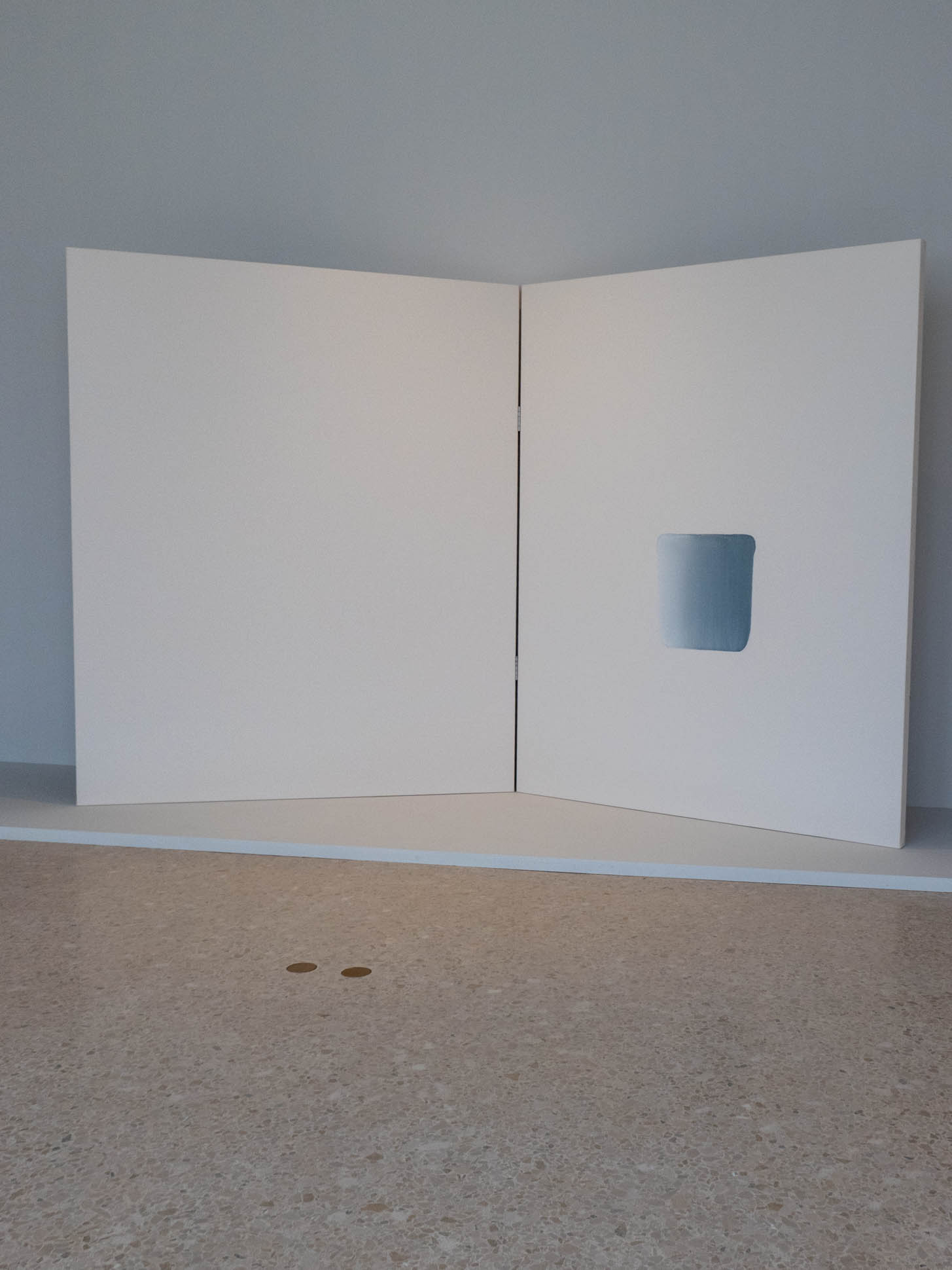
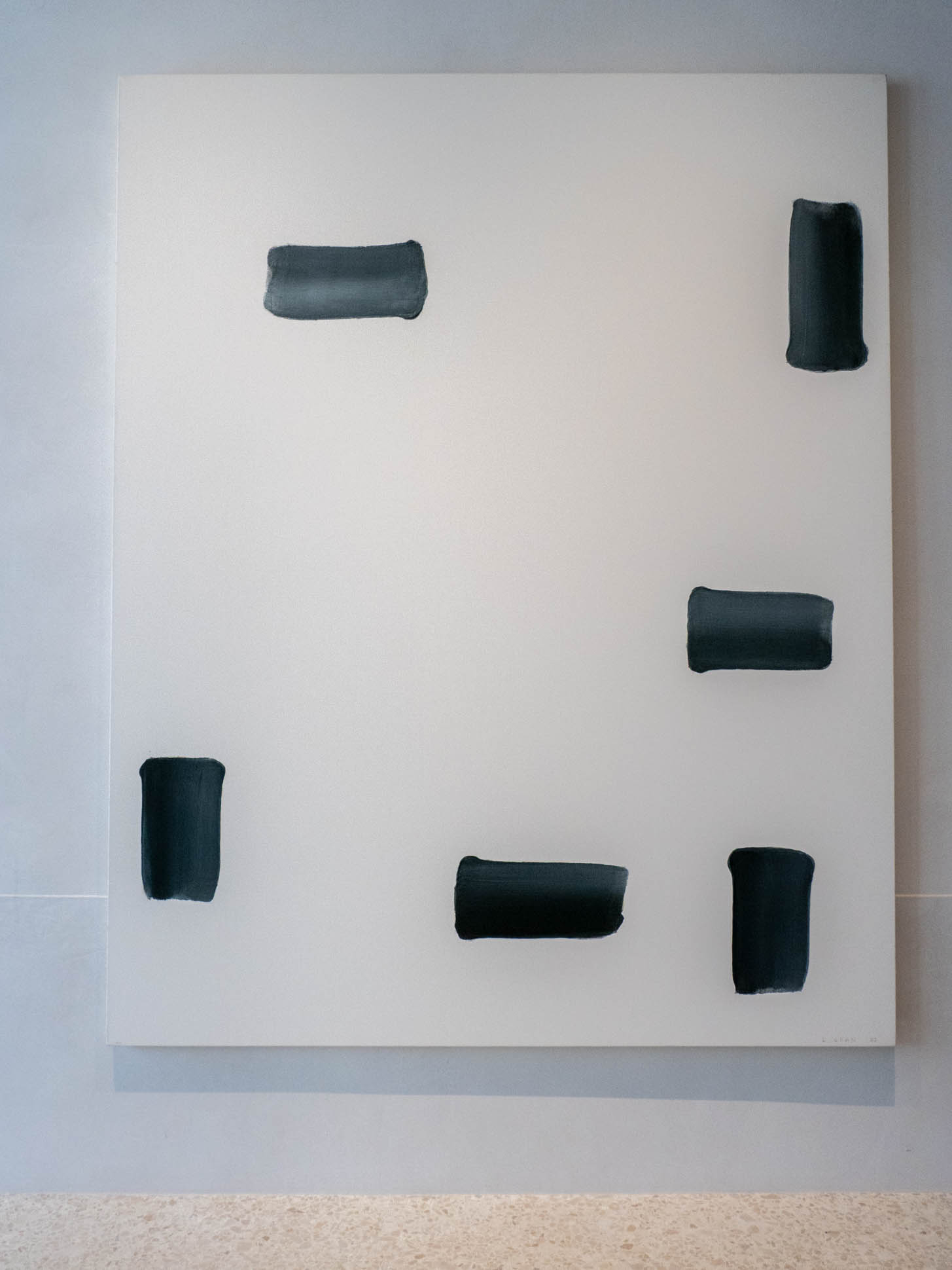
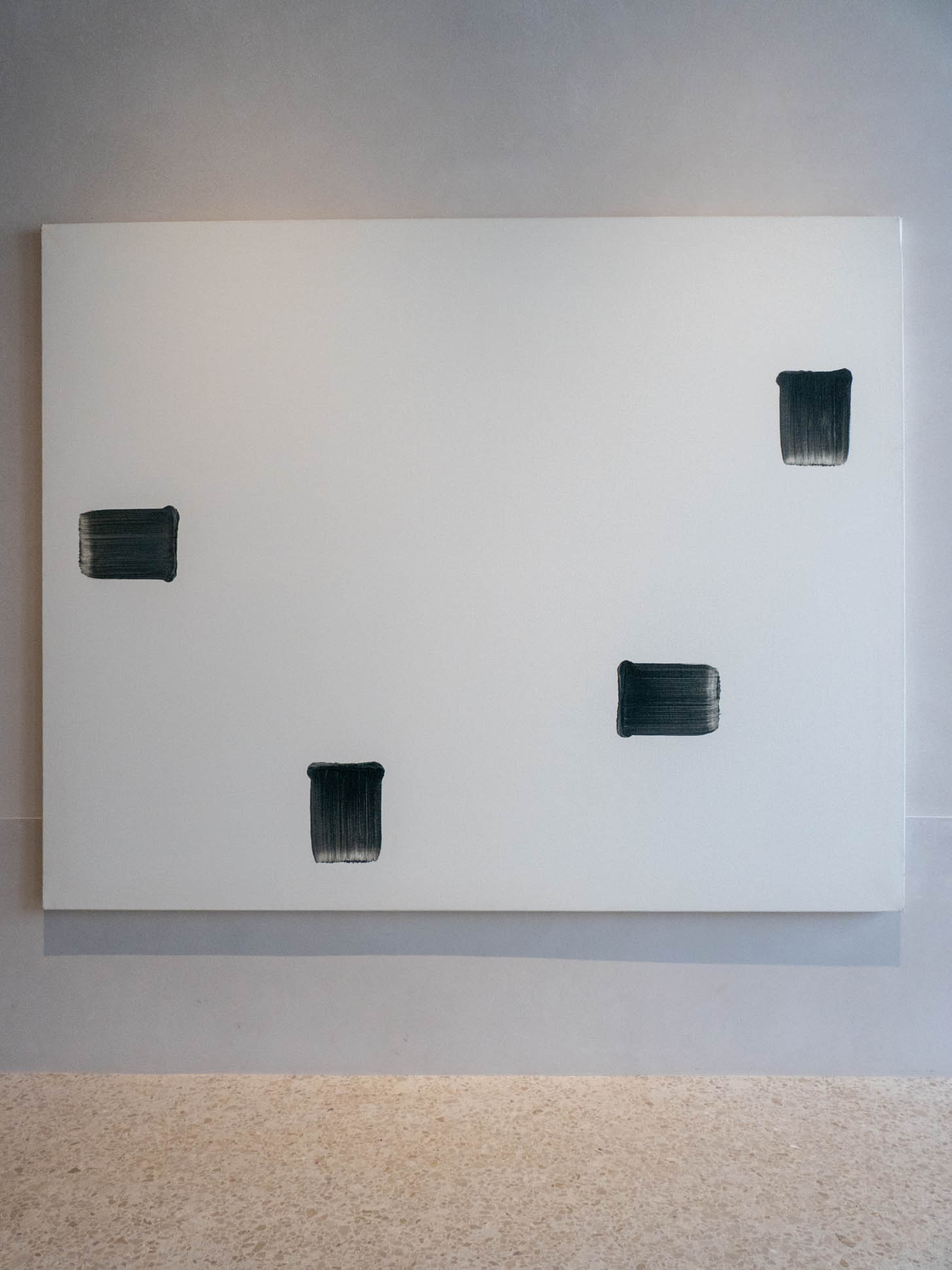
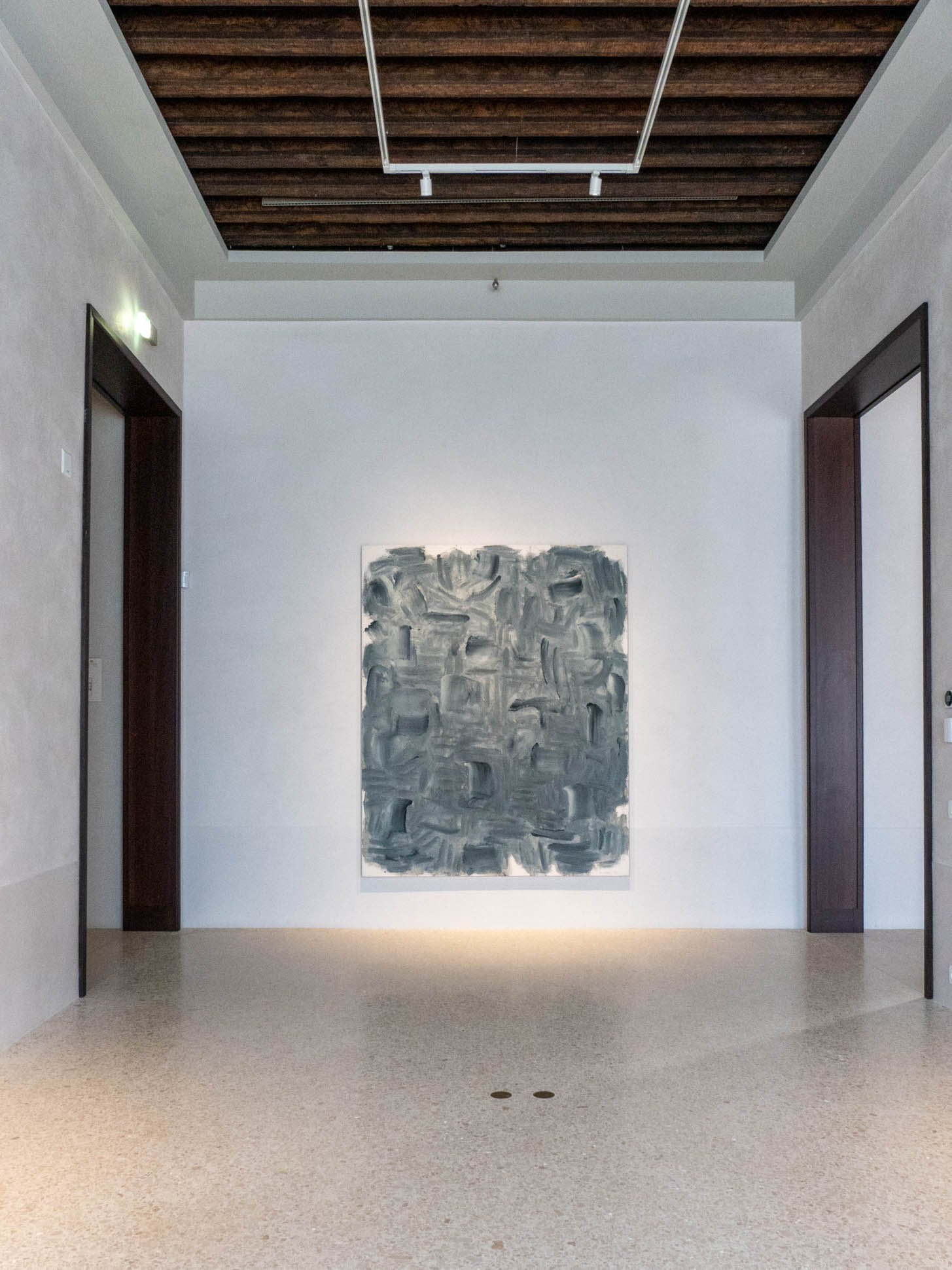
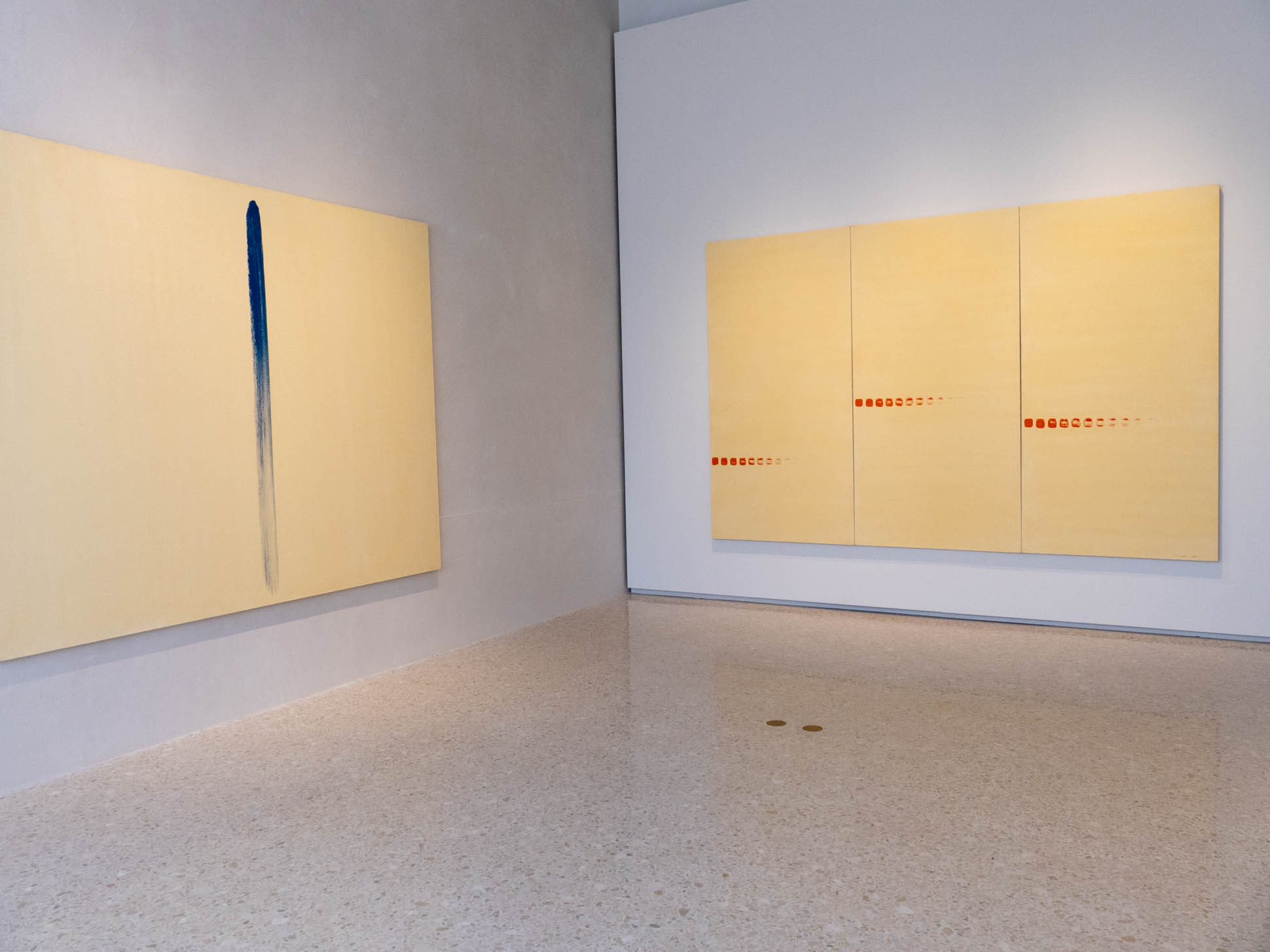
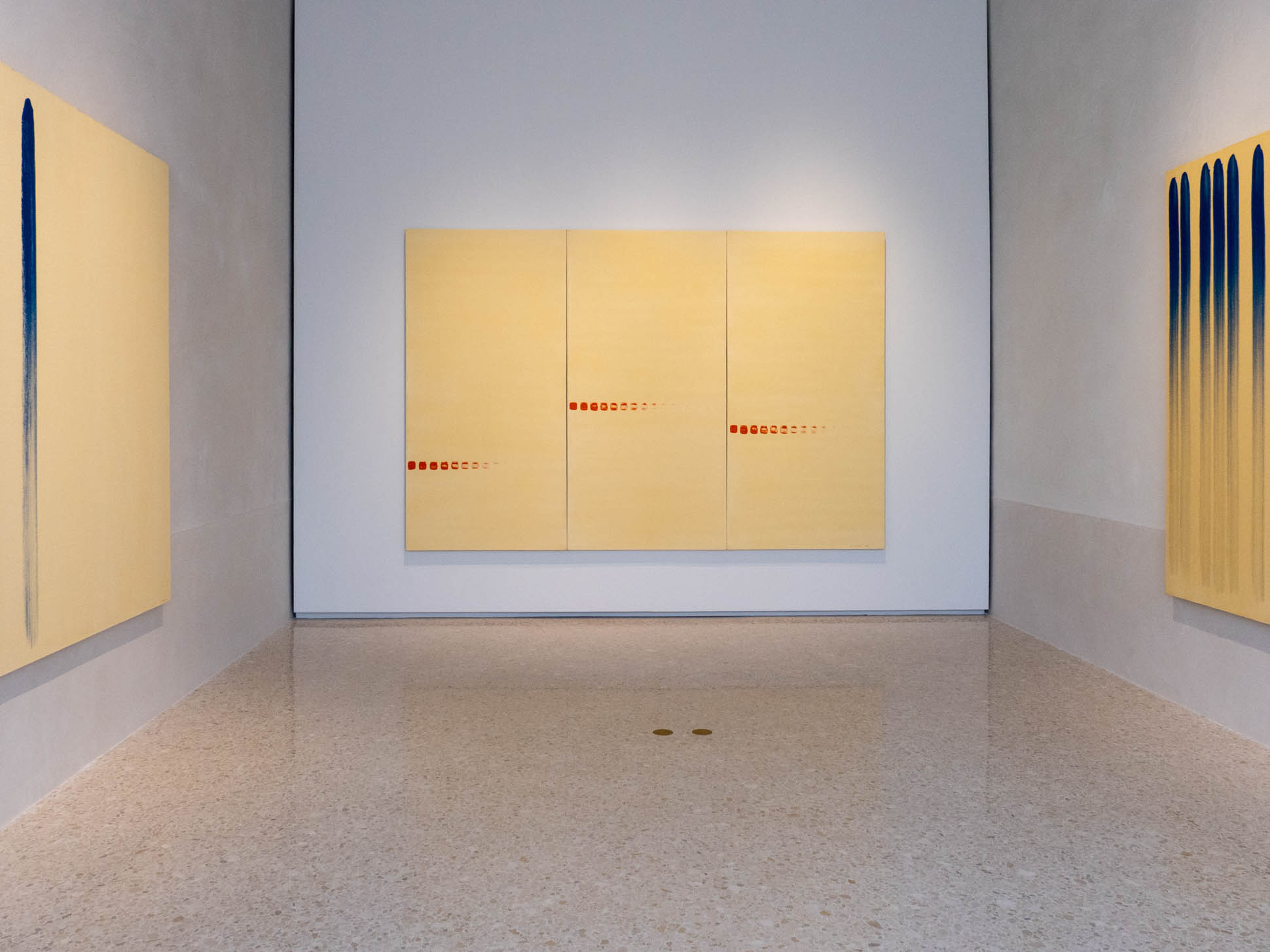
Lee Ufan’s work at SMAC Venice is about presence and space, about what happens between things. A stone placed in relation to an empty space. A single gesture of paint. A line that seems almost effortless, yet makes you stop and look again.
There is something deeply peaceful about his work.
It doesn’t demand that you understand it immediately. Instead, it gives you permission to pause.
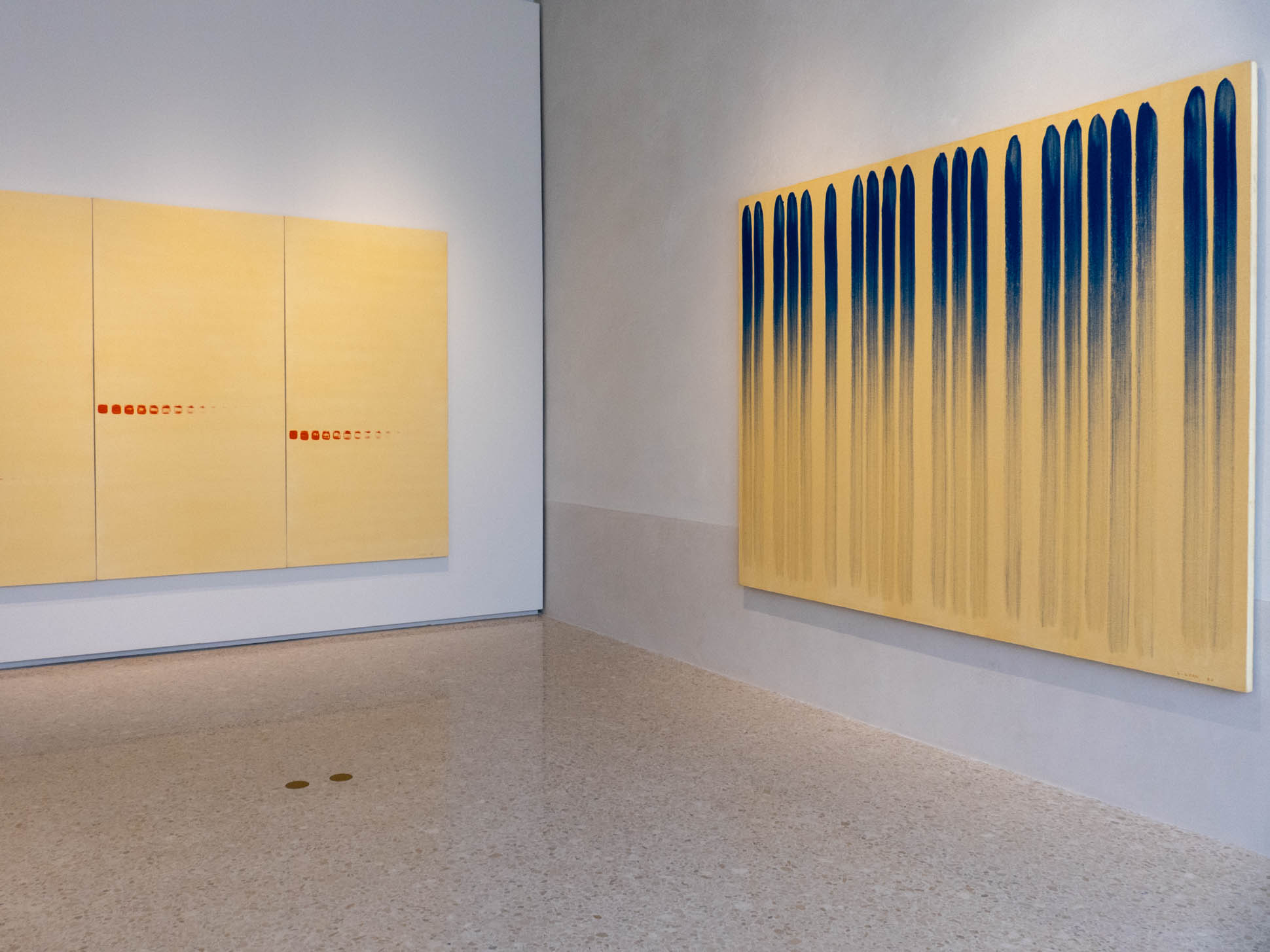
The 2026 exhibition at SMAC Venice brings together works from more than seven decades of Lee Ufan’s career, including historical and new paintings, large installations, and a new site-specific work. It occupies eight galleries in the Procuratie on Piazza San Marco and is curated by Jessica Morgan.
It is also especially meaningful because 2026 marks Lee Ufan’s 90th birthday.
Lee Ufan is a Korean-born artist and philosopher who has become one of the most important figures in postwar Asian contemporary art. Born in 1936 in South Korea, he moved to Japan in 1956, studied philosophy in Tokyo, and has lived and worked between Japan and France.
Lee Ufan is interested in relationships rather than objects alone: between stone and steel, paint and canvas, emptiness and form, the artwork and the person looking at it.
He became a leading theorist of Mono-ha, a Japanese movement that emerged in the late 1960s. Instead of transforming materials into elaborate objects, Mono-ha artists often presented materials such as stone, steel, glass and wood with minimal intervention. The idea was to make us notice the materials, the surrounding space, and the relationships between them.
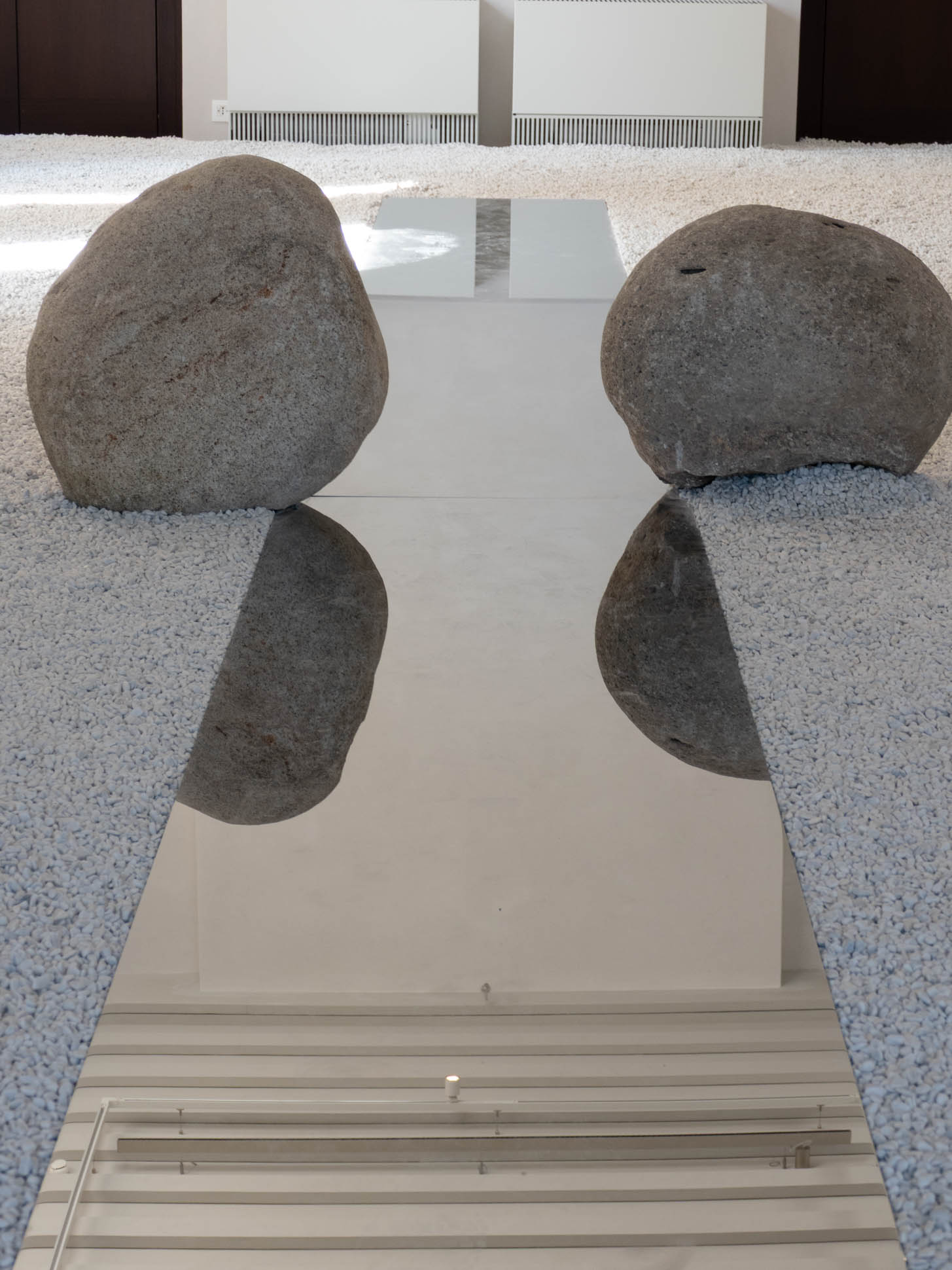
One of his best-known bodies of sculpture is Relatum. A stone might sit beside or on top of a steel plate, for example. The simplicity is deliberate: the encounter between natural and industrial materials becomes the artwork.
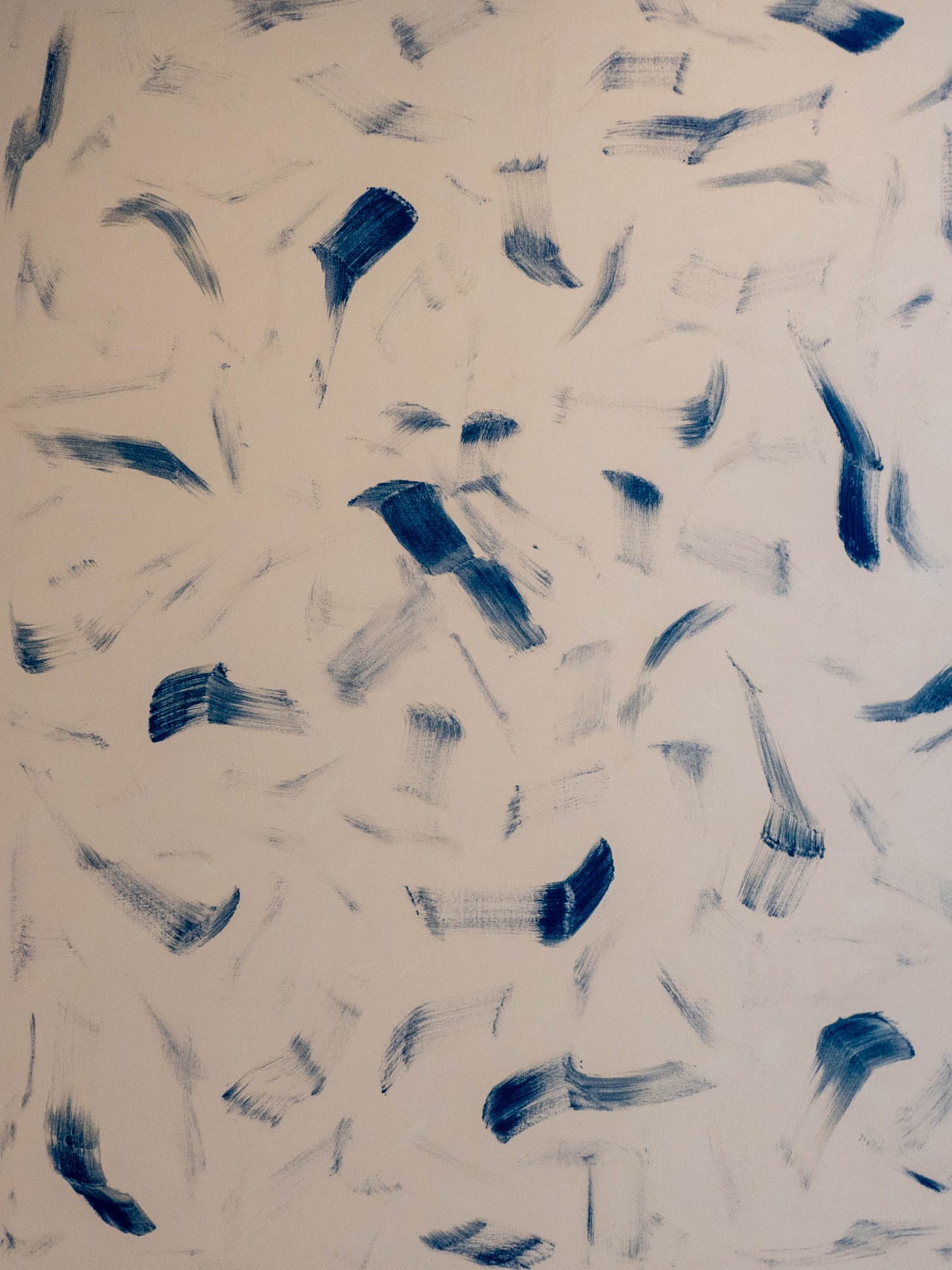
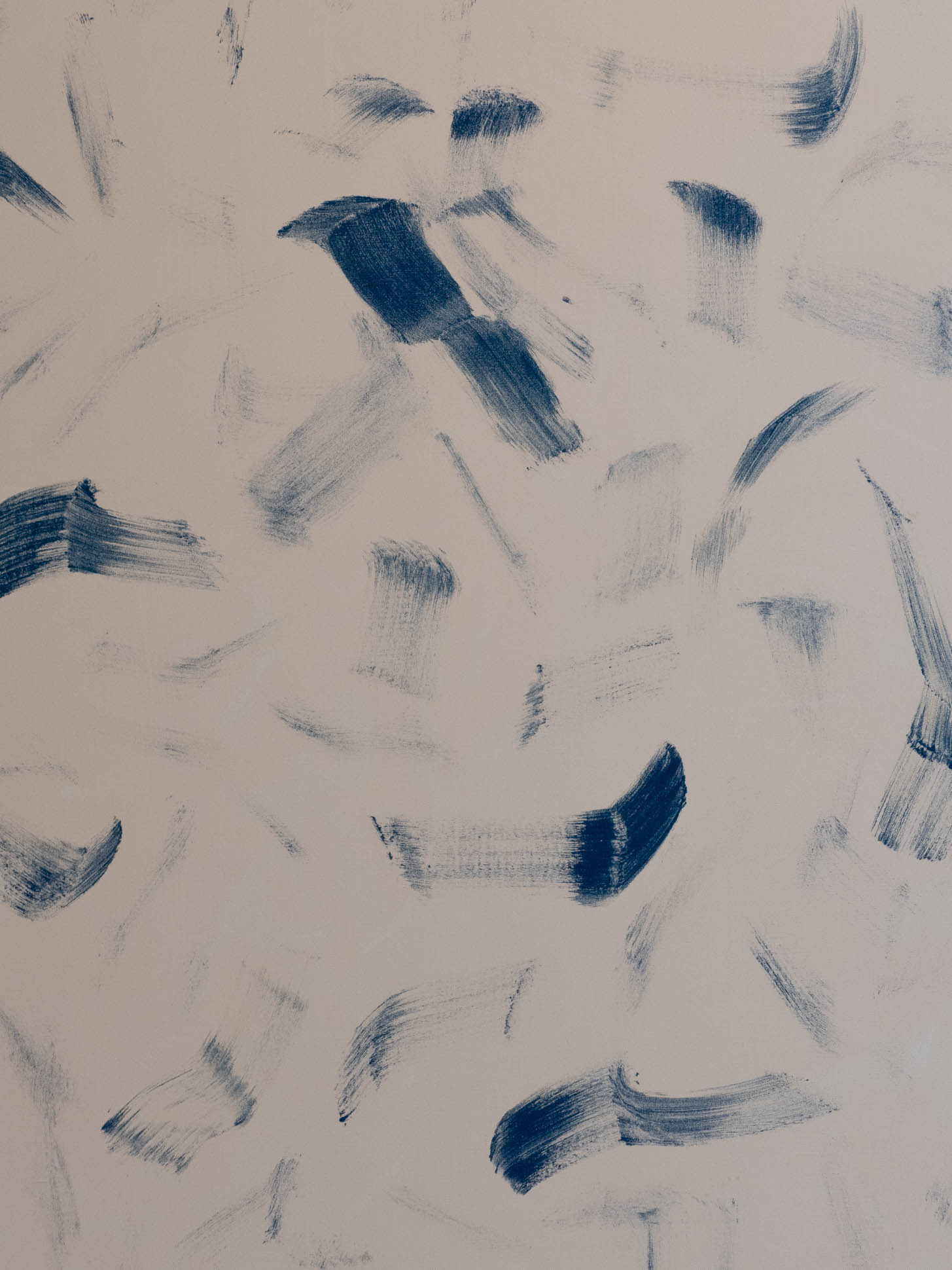
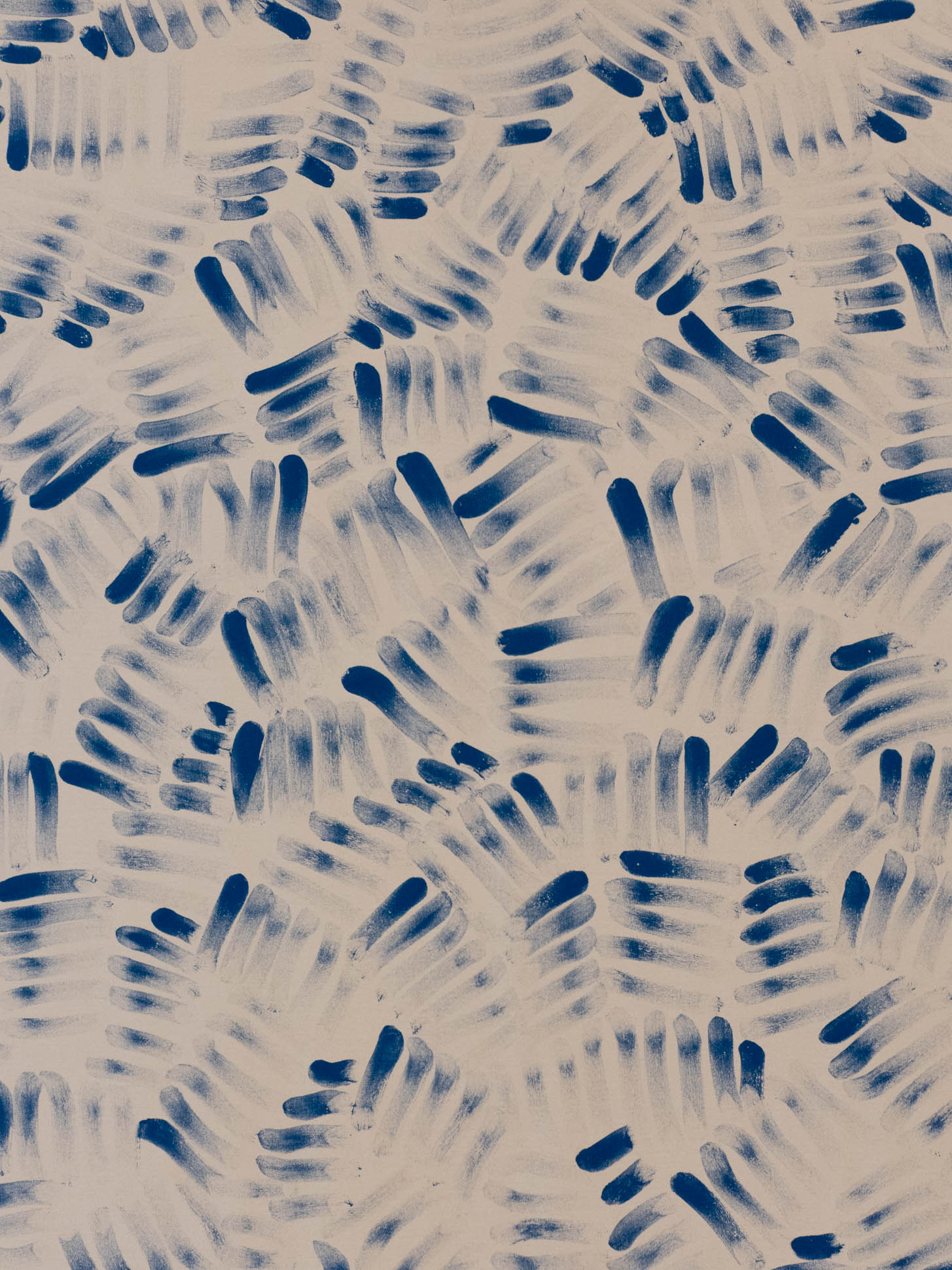
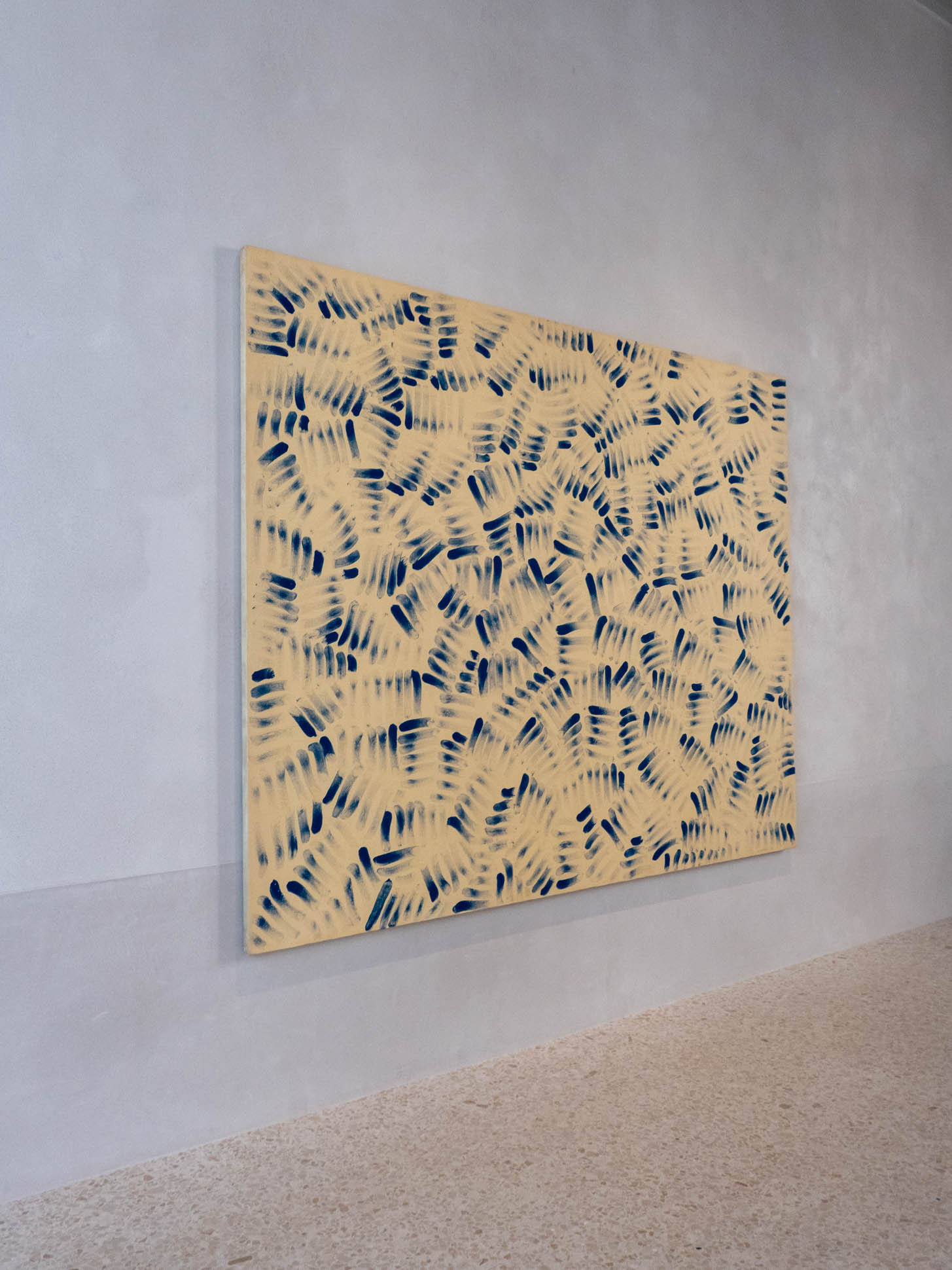
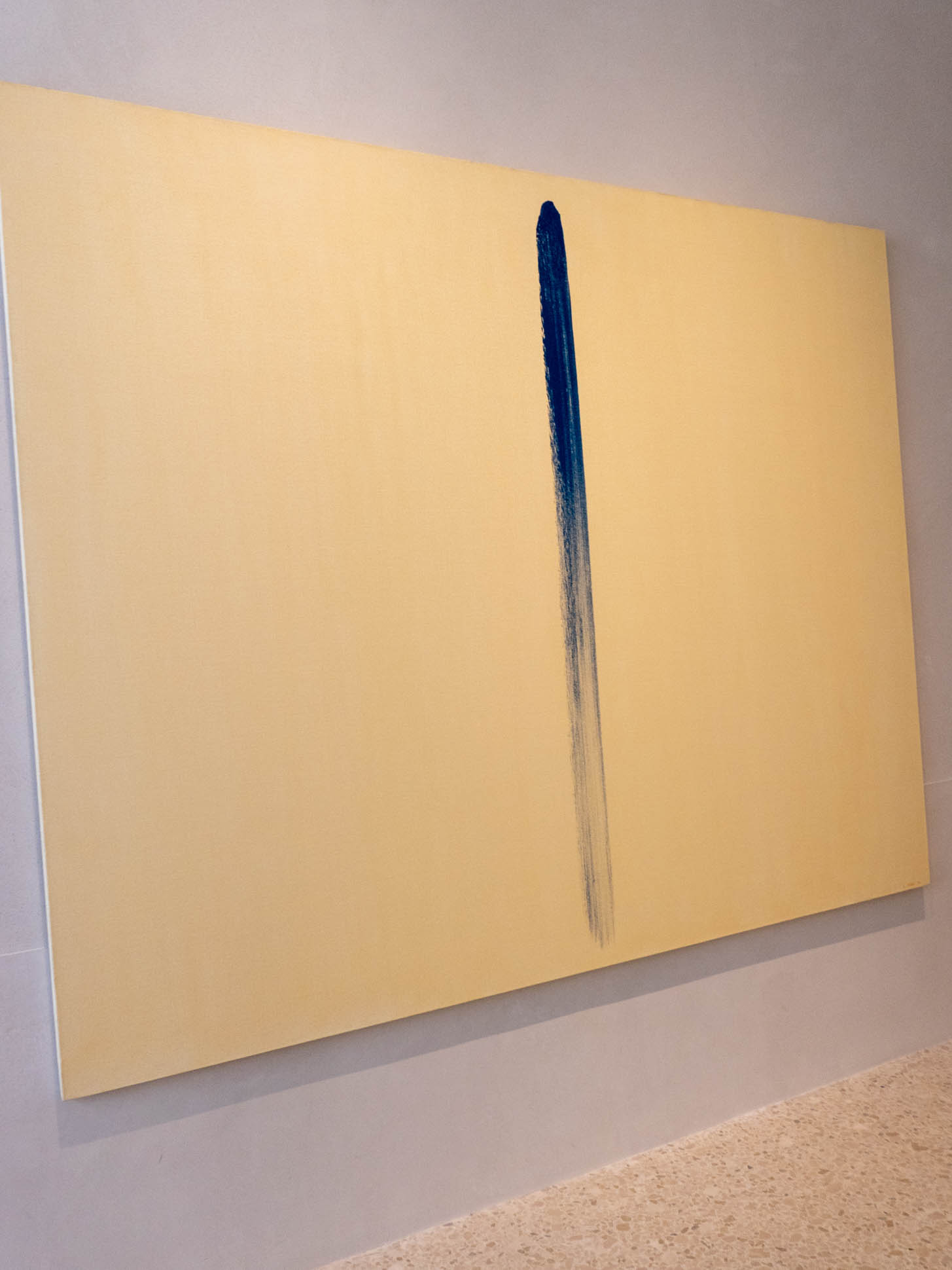
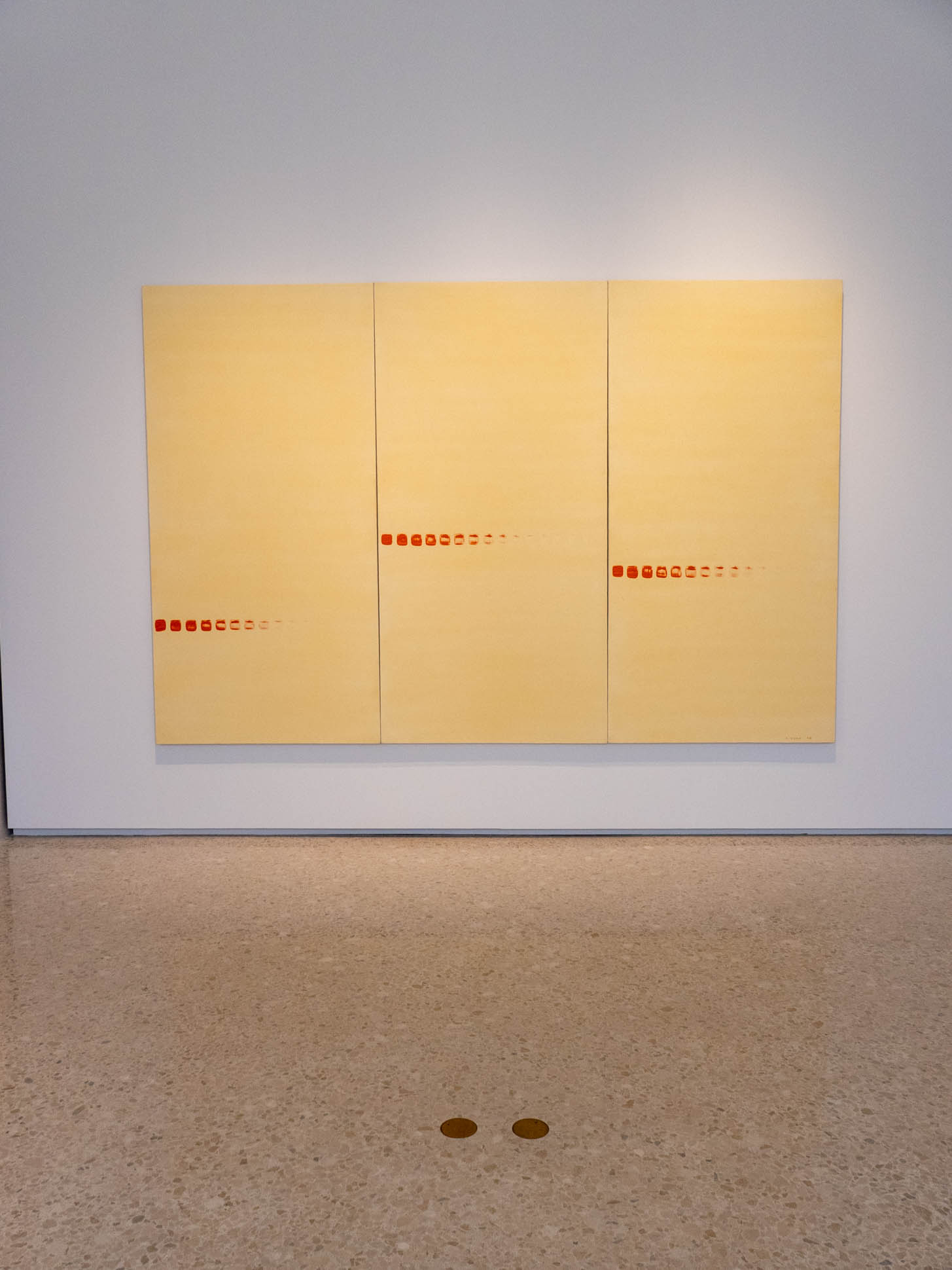
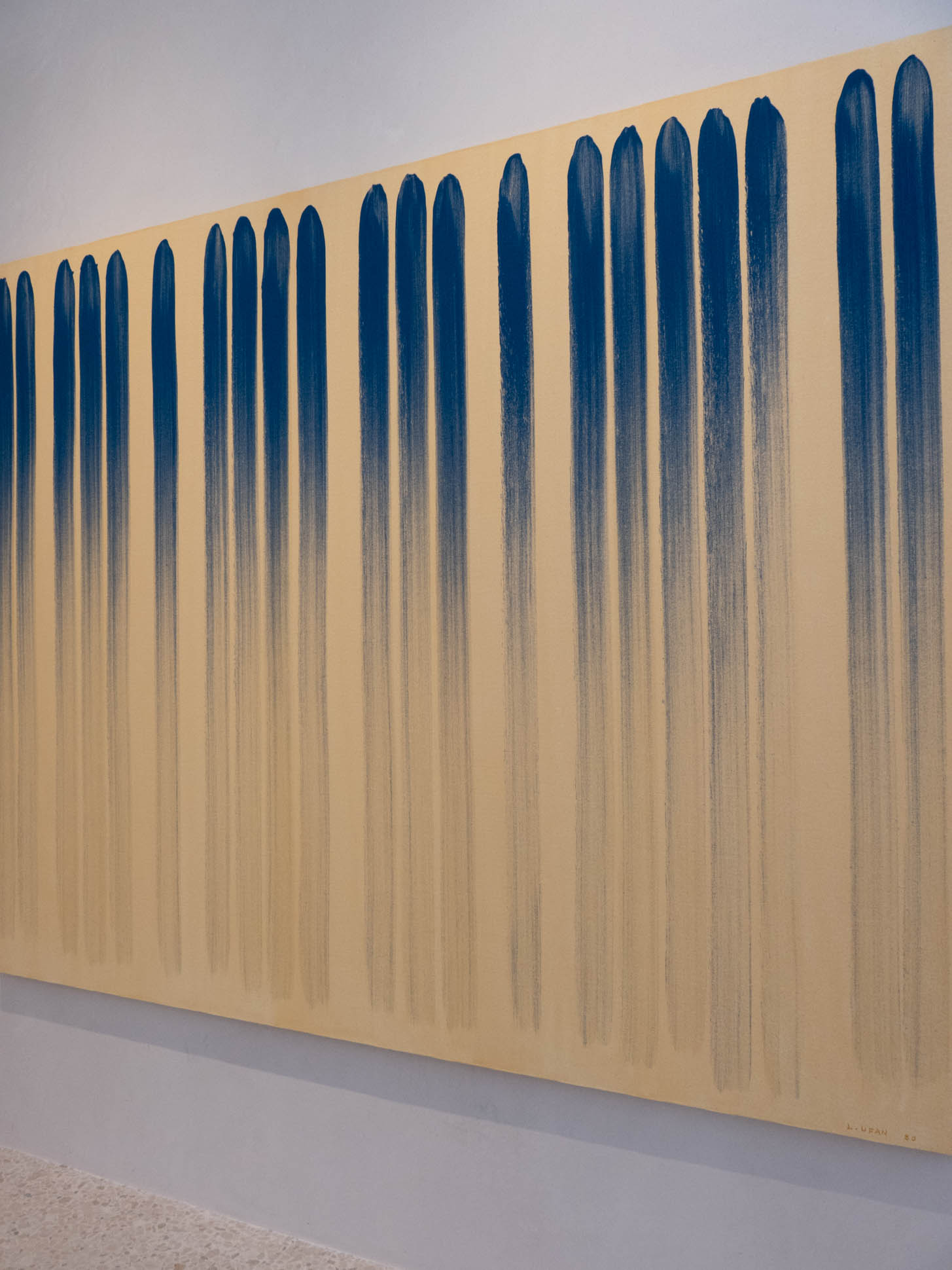
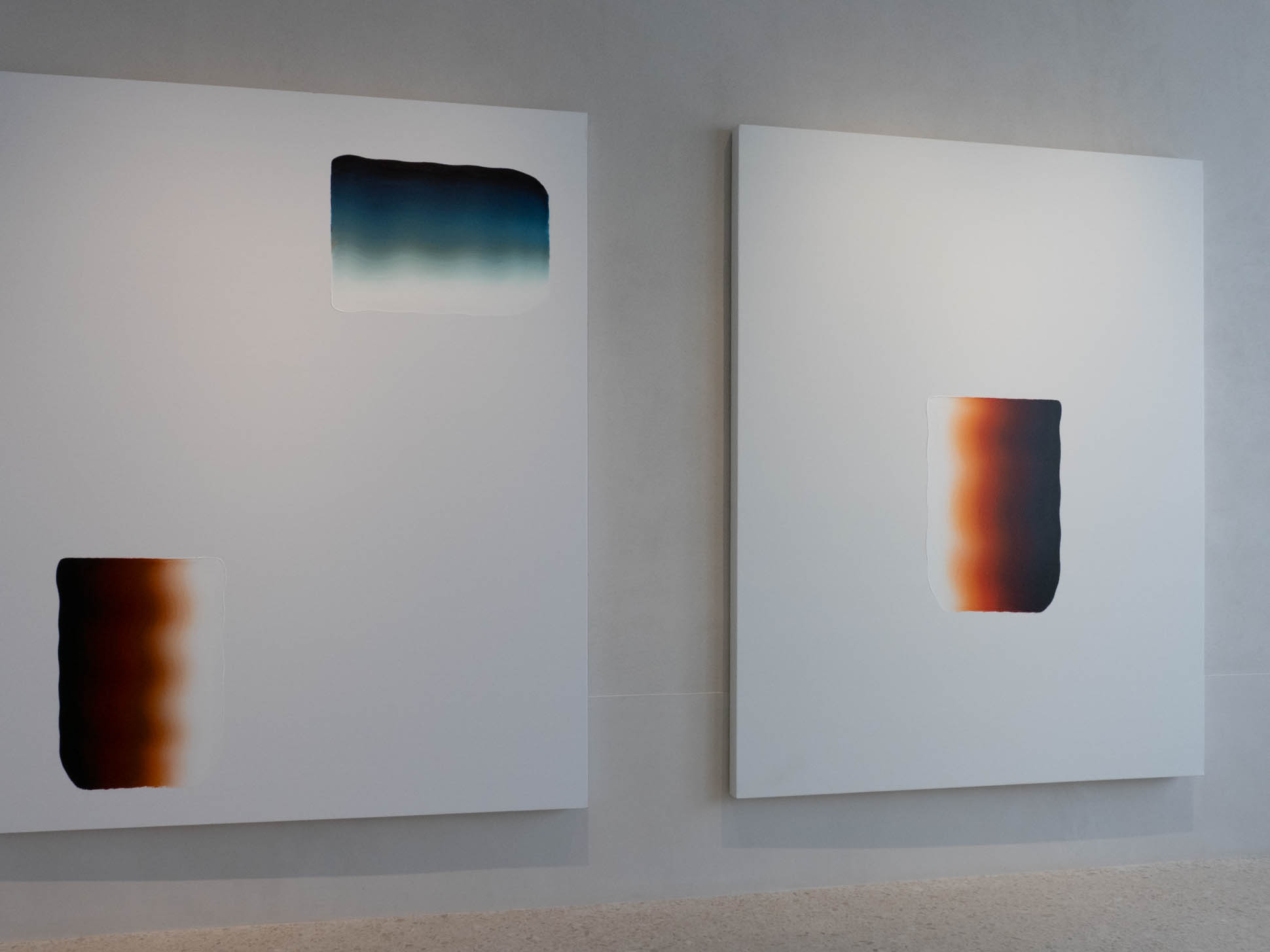
His paintings can look extremely minimal — sometimes just a few carefully placed brushstrokes. But the gesture is important. His From Point and From Line works explore the energy of the brushstroke, while later series such as From Winds, With Winds, Correspondence, Dialogue, and Response explore space, movement, colour and time.
What I find particularly interesting is that the empty space is not really “empty” in Lee Ufan’s work. It becomes part of the composition. You are encouraged to notice the distance between a mark and the edge of the canvas, between a stone and a steel plate, and even between yourself and the artwork.
Lorem ipsum dolor sit amet, consectetur adipiscing elit. Ut elit tellus, luctus nec ullamcorper mattis, pulvinar dapibus leo.